25 Years of Red Stitch

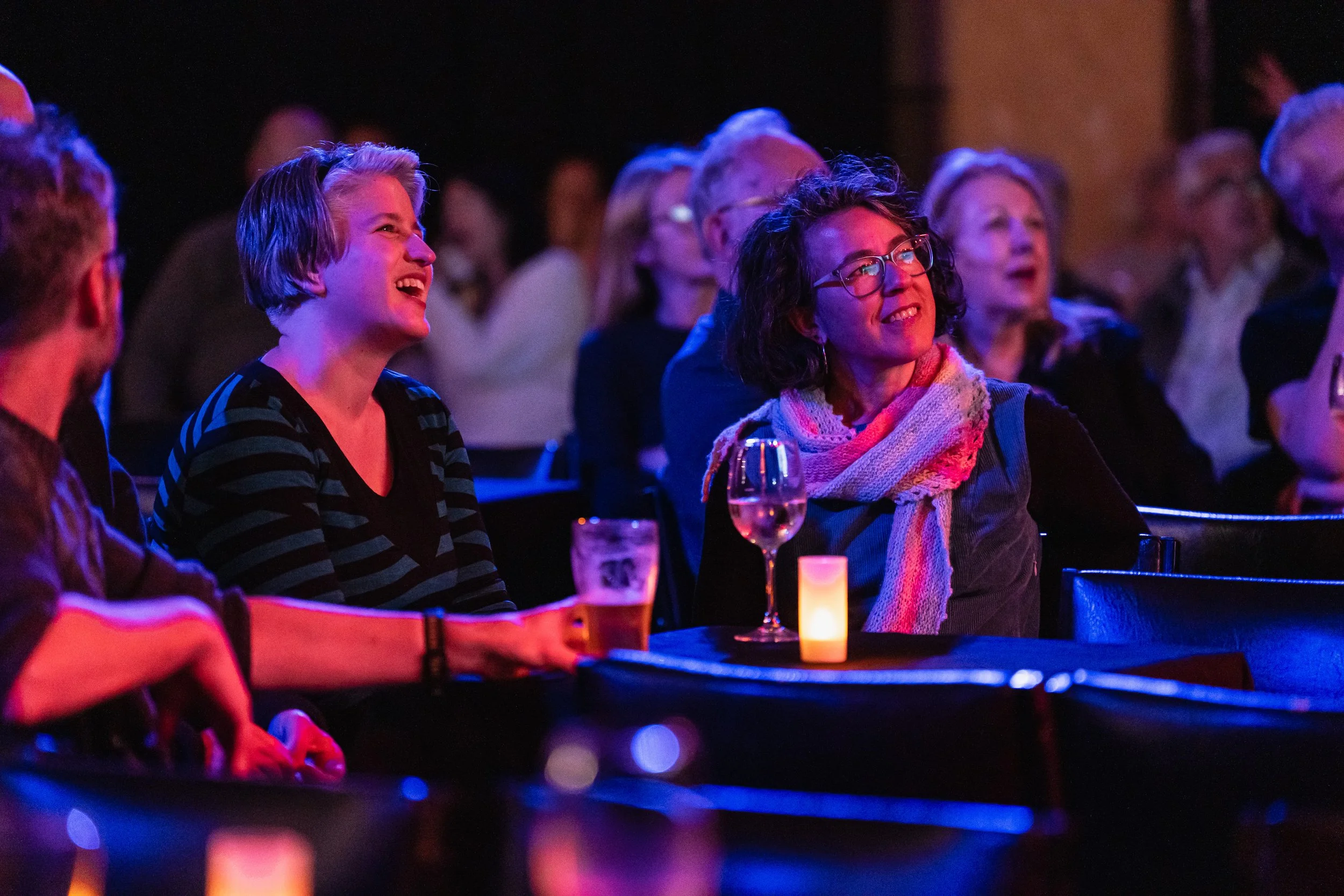
Two weeks ago, at our 2026 Season Launch, we gathered with artists, supporters, alumni and friends to honour something extraordinary: 25 years of Red Stitch. The room was alive with memory, joy, and the unmistakable feeling of a community that has built something together over decades.
As our founding Artistic Director, Vincent Miller, said on the night:
“It is because of these people and all that came after that we stand here today…
Red Stitch is the epitome of what you can do when enough passionate people work towards a common goal.”
Below are some of the sppeches from our launch night, reflecting on the last 25 years of Red Stitch.
VINCENT MILLER (founder of Red Stitch)
Brett Cousins, Daniel Frederickson, David Whitely, Dion Mills, Ella Caldwell, Kate Cole, Kat Stewart, Laura Gordon Lisa Reynolds, Nick Barkla, Olivia Connolly, Richard Cawthorn, Trent Baker, Verity Charlton, Andrea Mersits, Dans Sheehan.
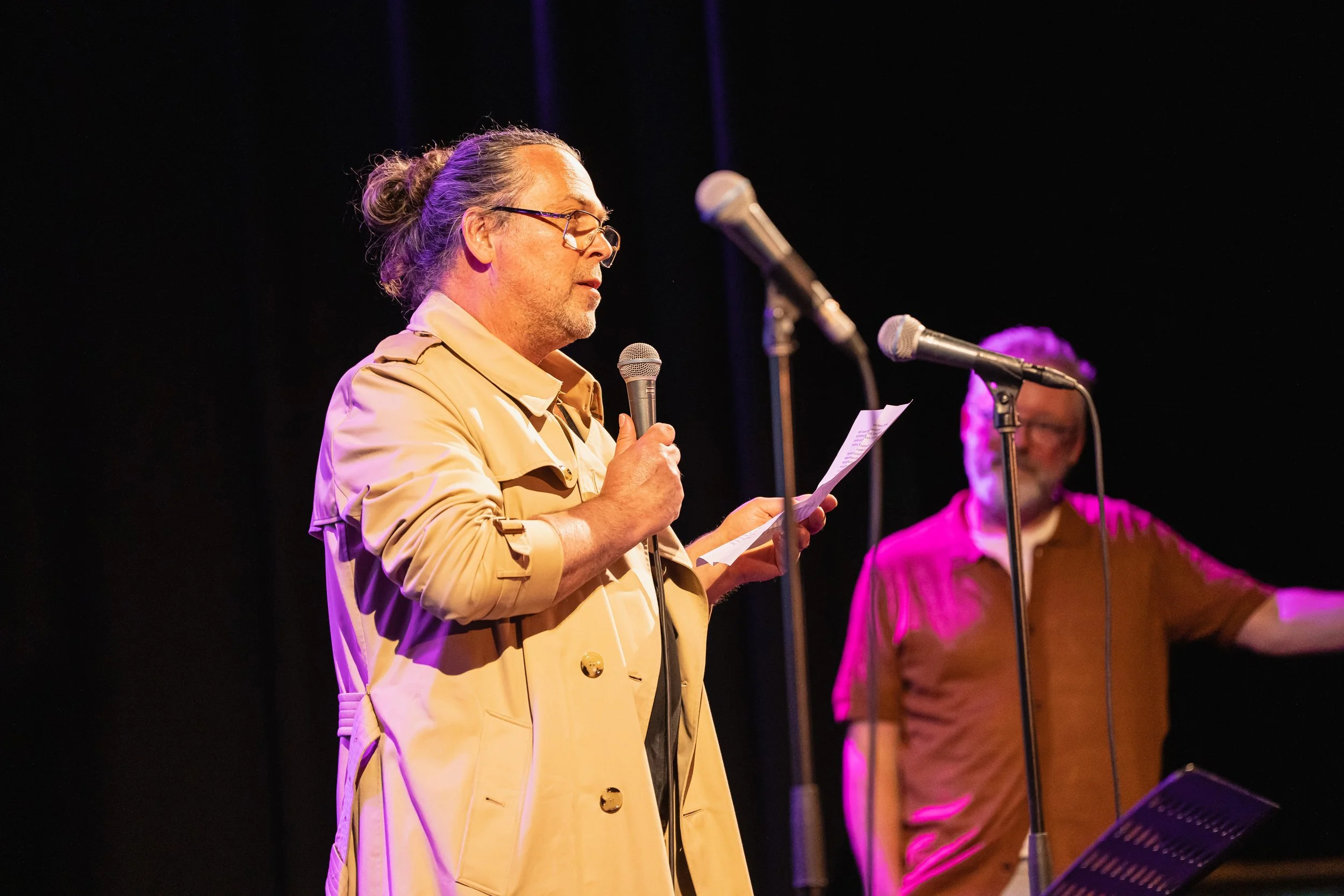
These were the people that were in the trenches with me. Whose names and faces will be forever etched in my mind. Who were the first to believe in what most said would never ever succeed. Who worked tirelessly next to me to make a dream a reality. It is because of these people and all that came after that we stand here today. It is because of these people that I am able to wake up in the morning look in the mirror and know that I did something in my life that actually mattered. And it is because of unmedicated ADHD that any of it happened in the first place.
They say history is written by the victors, the ones with power and money and influence. But I think we all know it is clearly the artists. The painters, sculptors, dancers, actors ,writers, directors, designers singers and musicians that present the truth of our society. Sometimes veiled and sometimes ( In the case of Red Stitch) like a sledgehammer to the face.
The truth is always somewhere in the art. And that is why art is an integral part of society that should be nurtured and protected and most importantly funded at all cost. That is why Red Stitch is important. That is why Red stitch has lasted 25 years. Beyond my vision. Beyond many of the original ensemble.
It is because it is a beacon for artists to express what’s inside and for audiences who crave the truth of the human experience. Somewhere you can sit next to a fellow human being and know that you are not alone in this world because the person sitting right next to you is laughing or crying or raging in unison with you at what is being shared on the stage.
Red Stitch is the epitome of what you can do when enough passionate people work towards a common goal. Despite the lack of money and resources this tiny company has created magic for 25 years and will do so for many more. Congratulations to Ella and the entire Red Stitch Family for this monumental achievement.
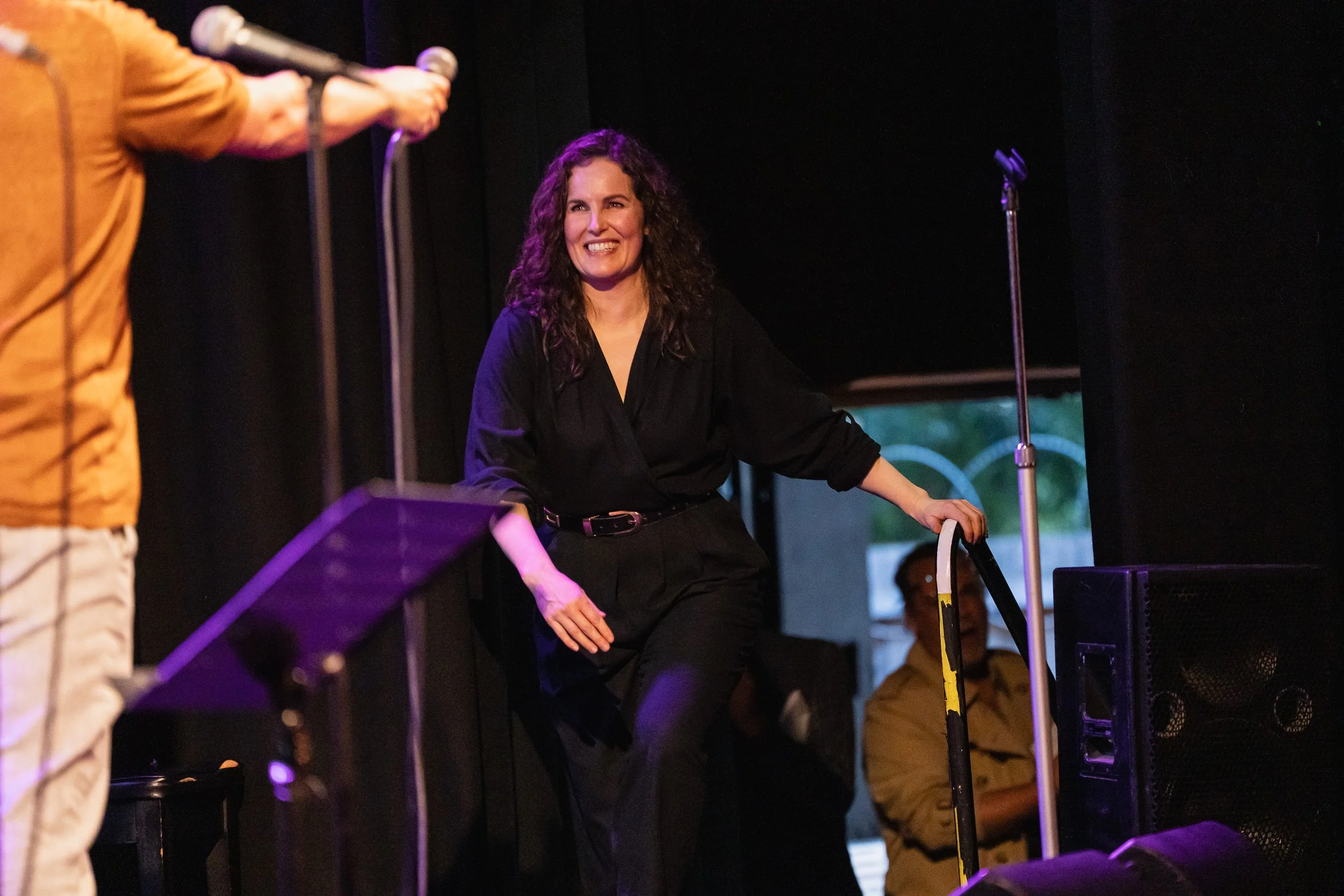
KATE COLE (Founding Ensemble Member)
When I was asked to talk about a memory of Red Stitch, the thing that came into my mind like a 1960s sitcom was a twirling image of a piece of wood. We were always dealing with wood, where to find the wood where to keep the wood, pile the wood somewhere, building sets with the wood, tearing the wooden sets down.
When we first started Red Stitch we were in a place in Inkerman st, and we performed 12 players in 12 months. So at the end of the final performances you’d bow then walk off stage, have 30 seconds to hold on to this precious thing that you created and poured your soul into, and then people would start streaming in and start ripping the set down. So you quickly got changed into your work clothes and started tearing it down too. We kept the wood down a stairwell. There were no lights in the stairwell. We just chucked all the wood down there haphazardly. In a bump out someone would say ‘where is so so’ and we’d say ‘oh they’ve gone to get wood’, and you just wouldn’t see them for hours.
When we moved out of that venue the problem arose again, what to do with the wood. So we stood on the first floor balcony and just chucked it out onto Inkerman st. I don’t know how we didn’t get fined. When we moved to our current venue on Chapel st, before it got the big renovation into its current form, it was just a small hall. And again, what do we do with the wood, where do we put it?
A grotesque, pagan triangle of wood started forming in the backyard. It grew higher and higher and higher. During a bump in and bump out you’d have to go out there, at night there was no light, only the moon casting a folk horror gleam, and you would attempt so select the exact type of wood you’d been tasked with finding. It was like a dangerous game of Tetris trying to extract the wood, to not have the whole pile collapse on top of you. You would then carried it in, wide eyed and terrified, to the set designer for their approval. We didn’t know what we were doing. The set designer would sigh and instruct us to take measurements and saw things off. We’d stagger away, find some kind of rusty wobbly saw from 1973 and start hacking into it, then return it to the designer feeling deeply traumatised at our pitiful carpentry skills.
I have memories of a sitting out in the hot sun one summer for over a week, each of the ensemble taking turns to try and dig ancient, rusty nails out of large pieces of wood from the 1920s. Hours and hours of it. We had no money and we were instructed to ‘save the wood!’for some unknown future use. I swear to god we never used that wood. It was one of the hardest things I’ve ever done.
In our first renovation at Chapel St, my father, who was in his late 60s/ early 70s, built our first mezzanine level where the bio box went. My dad was a vet but he also loved to tinker with building. He built that almost all by himself over another endless hot summer.
I also have a strong memory of my dad, the founder of Red Stitch Vincent Miller and myself erecting a secondhand, rickety, sheet metal shed out the back, and again, finding places to store the wood. We built long shelves at the back of the shed and some along the side of the building. It was always a nightmare trying to find the right piece of wood, to bit by bit slowly pull it out of the shelves, only to realise you’d chosen the short tooth pick, instead of the long.
It was hard work, I was always slightly panicked, but when I collapsed on my bed in the witching hour after the festival of wood, after all that manual labour, I felt immensely satisfied and quietly thrilled at what we were all creating.